
Non-Surgical Options for Rotator Cuff Tears: What’s Available

non-surgical-options-for-rotator-cuff-tears:-what's-available

It often starts quietly.

A dull ache in the shoulder when you reach overhead. Trouble fastening a seatbelt. Pain that wakes you up when you roll onto one side at night. At first, many people brush it off as “just aging” or overuse. But when the pain lingers — or worsens — the diagnosis surprises them:

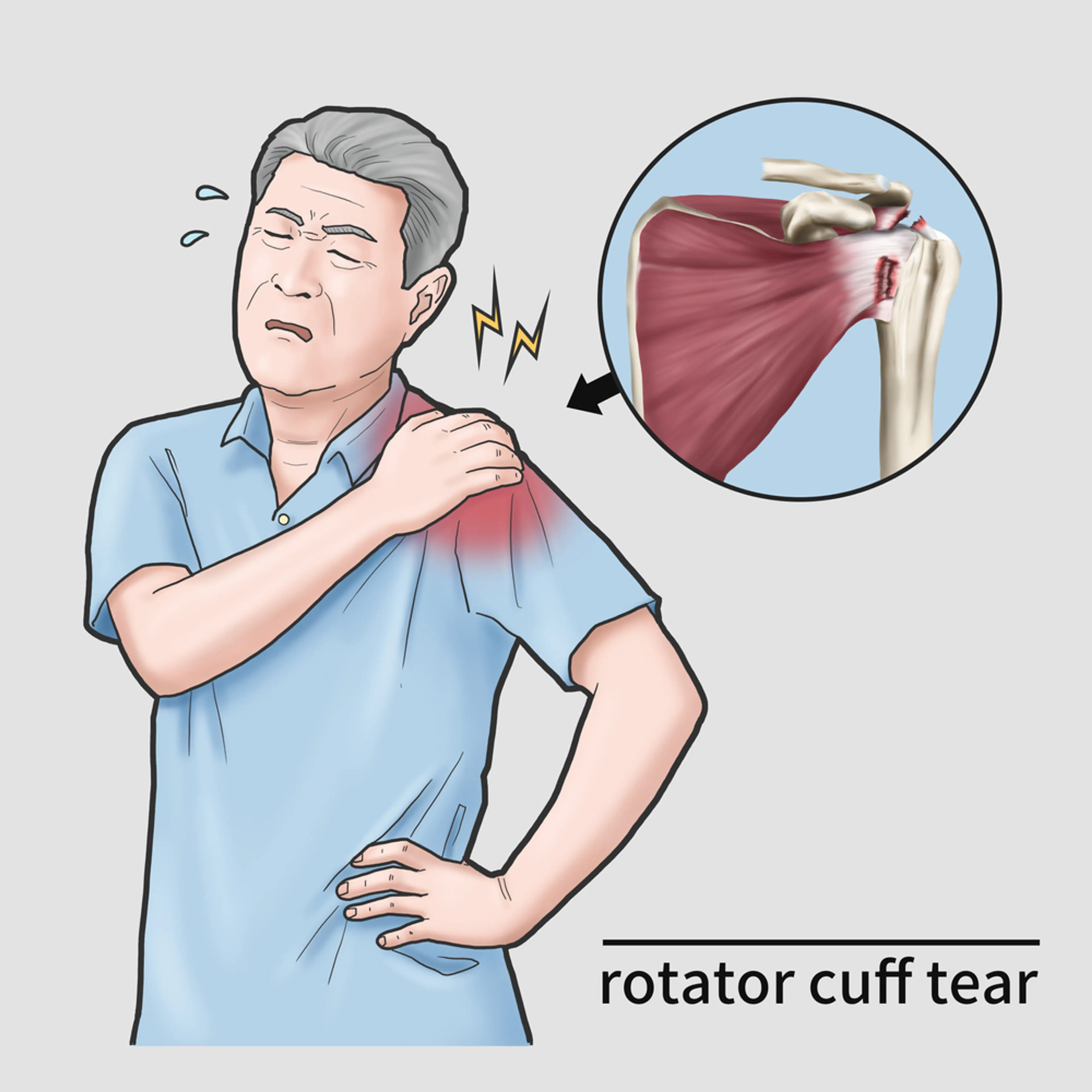
A rotator cuff tear.
For decades, that diagnosis felt like a crossroads with only two paths: live with the pain, or have surgery. Yet today, that picture is far more nuanced. In clinical practice, especially in Korea where patients often prefer conservative care first, many rotator cuff tears can be managed effectively without surgery — sometimes with outcomes that surprise even skeptical patients.

This article walks through what non-surgical options actually exist, who they’re best suited for, and what realistic recovery looks like when surgery isn’t the first step.

Understanding Rotator Cuff Tears

understanding-rotator-cuff-tears-(before-talking-about-treatment)
The rotator cuff is not a single structure. It’s a coordinated system of four muscles and their tendons that stabilize the shoulder and guide movement:
  • Supraspinatus

  • Infraspinatus

  • Teres minor

  • Subscapularis

These tendons work like tensioned ropes, keeping the ball of the shoulder centered in the socket while allowing wide, complex motion.

Over time — or after injury — these tendons can weaken, fray, or tear.

Not All Tears Are the Same

not-all-tears-are-the-same

This is one of the most important points patients often misunderstand.

A “tear” can mean:

  • a small partial-thickness tear

  • a degenerative fraying of tendon fibers

  • a moderate full-thickness tear

  • a large, retracted tear with muscle atrophy

MRI reports can sound alarming, but the size of the tear does not always correlate with pain or function. We routinely see patients with significant tears who function reasonably well — and others with small tears who are in constant pain.
That’s why treatment decisions should be based on symptoms, function, tissue quality, and patient goals, not imaging alone.

Why Surgery Isn’t Always the First Answer?

why-surgery-isn't-always-the-first-answer

Surgery has an important role, especially for:

  • acute traumatic tears in younger patients

  • large, retracted tears with loss of strength

  • cases that fail comprehensive conservative care

But surgery also involves:

  • long rehabilitation (often 6–12 months)

  • post-operative stiffness risk

  • variable tendon healing, especially with age

  • time away from work or daily activities

For many patients — particularly those with degenerative or partial tears — non-surgical options can reduce pain, restore function, and delay or even eliminate the need for surgery.

Non-Surgical Options for Rotator Cuff Tears

non-surgical-options-for-rotator-cuff-tears

1. Precision-Based Physical Therapy

1.-precision-based-physical-therapy-(not-generic-exercise)

Exercise is often the first recommendation — but not all physical therapy is equal.

For rotator cuff tears, effective rehabilitation focuses on:

  • restoring scapular (shoulder blade) mechanics

  • strengthening intact rotator cuff fibers

  • improving rotator cuff–deltoid balance

  • correcting posture and movement patterns

What matters most is precision. Aggressive or poorly guided exercise can actually worsen symptoms by increasing tendon compression.
When therapy is matched to the specific tear pattern and pain behavior, many patients regain usable strength and range of motion — even with a tear present.

2. Ultrasound-Guided Injections

2.-ultrasound-guided-injections-(accuracy-changes-outcomes)

Blind injections into the shoulder often miss the true pain generator.

At clinics like Howard Pain Clinic, high-resolution ultrasound allows real-time visualization of:
  • torn tendon edges

  • inflamed bursae

  • surrounding nerves

  • compensating muscles

This precision enables targeted injections that can:

  • reduce inflammation

  • calm pain pathways

  • improve movement tolerance

  • support rehabilitation progress

Common Injection Types Include:

common-injection-types-include:
  • Subacromial anti-inflammatory injections
    Useful for reducing pain that blocks rehab, especially in acute flare-ups.
  • Targeted tendon or bursal injections
    Delivered precisely to avoid weakening healthy tissue.
When used thoughtfully, injections are not a crutch — they’re a window of opportunity to restore function.

3. Regenerative Injections (PRP, Prolotherapy-Based Approaches)

3.-regenerative-injections-(prp-prolotherapy-based-approaches)

This is where non-surgical care has evolved significantly.

Instead of only suppressing inflammation, regenerative therapies aim to improve tendon health itself.

Platelet-Rich Plasma (PRP)

platelet-rich-plasma-(prp)

PRP uses concentrated growth factors from your own blood to:

  • stimulate collagen remodeling

  • improve tendon microenvironment

  • support gradual tissue repair

In partial tears and degenerative tendinopathy, PRP may:

  • reduce pain

  • improve function

  • slow progression of degeneration

Results are not immediate — they develop over weeks to months — but many patients value the biological approach.

Prolotherapy-Based Tendon Support

prolotherapy-based-tendon-support

Prolotherapy techniques aim to:

  • stimulate controlled repair

  • strengthen tendon–bone interfaces

  • address chronic tendon laxity

In the shoulder, this can help stabilize mechanics and reduce strain on damaged fibers.

These treatments are most effective when:

  • guided by ultrasound

  • combined with appropriate rehab

  • tailored to tear severity and tissue quality

4. Pain-Modulating Nerve Treatments

4.-pain-modulating-nerve-treatments

In some patients, shoulder pain persists even when tendon damage is relatively stable.

Why?

Because nerves around the shoulder can become sensitized, amplifying pain signals.

Targeted nerve treatments can:

  • reduce hypersensitivity

  • calm persistent pain loops

  • allow better participation in therapy

This is particularly helpful for patients who:

  • have night pain

  • experience pain disproportionate to imaging

  • have failed standard treatments elsewhere

5. Activity Modification Without “Giving Up Your Life”

5.-activity-modification-without-"giving-up-your-life"

Non-surgical care does not mean immobilization forever.

It means:

  • modifying aggravating movements temporarily

  • adjusting sleeping positions

  • optimizing daily mechanics

Many patients fear that avoiding surgery means accepting permanent limitation. In reality, smart load management often restores confidence and function over time.

Who Is a Good Candidate for Non-Surgical Care?

who-is-a-good-candidate-for-non-surgical-care

Non-surgical treatment is often appropriate for:

  • partial-thickness tears

  • small to moderate degenerative tears

  • older patients with reasonable function

  • patients without significant muscle atrophy

  • individuals prioritizing conservative care

It can also be a valuable first step, even if surgery remains an option later.

What Patients Should Realistically Expect?

what-patients-should-realistically-expect

Improvement, Not Instant Perfection

improvement-not-instant-perfection

Non-surgical recovery is gradual. Most patients notice:

  • pain reduction first

  • improved sleep next

  • functional gains over weeks to months

The shoulder may never feel “brand new,” but many patients return to:

  • daily activities

  • light sports

  • work without constant pain

Commitment Matters

commitment-matters

Outcomes depend heavily on:

  • adherence to rehab

  • realistic timelines

  • collaboration between patient and clinician

Non-surgical care works best as a process, not a single intervention.

Why Ultrasound-Guided Diagnosis Changes Everything?

why-ultrasound-guided-diagnosis-changes-everything

One of the reasons non-surgical care sometimes “fails” is misdiagnosis.

Shoulder pain can come from:

  • the rotator cuff

  • the bursa

  • the biceps tendon

  • the neck

  • nerve entrapment

At Howard Pain Clinic, ultrasound allows us to:

  • confirm the pain source dynamically

  • differentiate tear-related pain from compensation pain

  • monitor tissue response over time

That clarity prevents unnecessary surgery — and unnecessary suffering.

The Korean Perspective: Conservative First, Precise Always

the-korean-perspective:-conservative-first-precise-always

In Korea, many patients prefer:

  • minimally invasive treatment

  • function over cosmetic perfection

  • stepwise escalation of care

This aligns naturally with non-surgical rotator cuff management. The goal is not to avoid surgery at all costs — but to use it only when it truly adds value.

Final Thoughts

final-thoughts

A rotator cuff tear is not a sentence — it’s a condition with options.

Non-surgical treatments today are far more advanced than they were even ten years ago. With accurate diagnosis, ultrasound-guided precision, regenerative techniques, and well-designed rehabilitation, many patients find meaningful relief without ever entering an operating room.
If you’ve been told surgery is your only option — or if shoulder pain is quietly limiting your life — a comprehensive evaluation at a clinic experienced in ultrasound-guided, regenerative shoulder care, such as Howard Pain Clinic, may reveal paths you didn’t know were available.
Sometimes the smartest treatment is not the most aggressive one —
but the one that restores movement, confidence, and quality of life step by step.